

When Does Amazon Pay? Payment Cycle Basics and Reserve Fund Mechanics for Beginners
Many new Amazon sellers are surprised when they think "the product sold, but the money hasn't come in yet." Amazon's payout cycle is based on a unique rule different from general bank transfers, and the existence of the "reserve fund" (reserve amount) that temporarily withholds a portion of sales further complicates cash flow for sellers. In this article, we will clearly explain the basic structure of the payout cycle and how the reserve fund works, specifically for new managers.

Table of Contents (Click to Expand)
1. The Mechanism of Amazon Payout Cycles: Understanding the 14-Day Rule
Amazon settles payments to sellers on a 14-day cycle. After a sale, funds are held during the settlement period, then transferred to your registered bank account. Understanding this cycle is essential for cash flow management.
Amazon's standard payment cycle is 14 days from order confirmation, but actual disbursement timing depends on account health metrics and reserve policies. New sellers typically face longer reserve periods of 7-21 days.

2. What Is the Reserve Fund? Its Purpose and Calculation Logic
The reserve fund is a portion of sales revenue that Amazon withholds as guarantee against claims, returns, and A-to-Z refunds. For new sellers, this can reach up to 50% of sales.
Especially for new accounts, sales may be held for 7 days from the latest order. As a result, it is not uncommon for actual payment to arrive "approximately 3 weeks after the order." The following graph shows the typical cash flow transition from the start of settlement to actual receipt of funds.
3. Three Specific Measures to Accelerate Payouts
Account age, Order Defect Rate, late shipment rate, customer feedback, and return rates all influence payment timing. Maintaining excellent metrics gradually reduces holds.
To optimize cash flow, monitor the Reserve Rate metric in Seller Central and maintain order defect rates below 1%. Sellers with consistently strong performance metrics often see reduced reserve amounts over time.
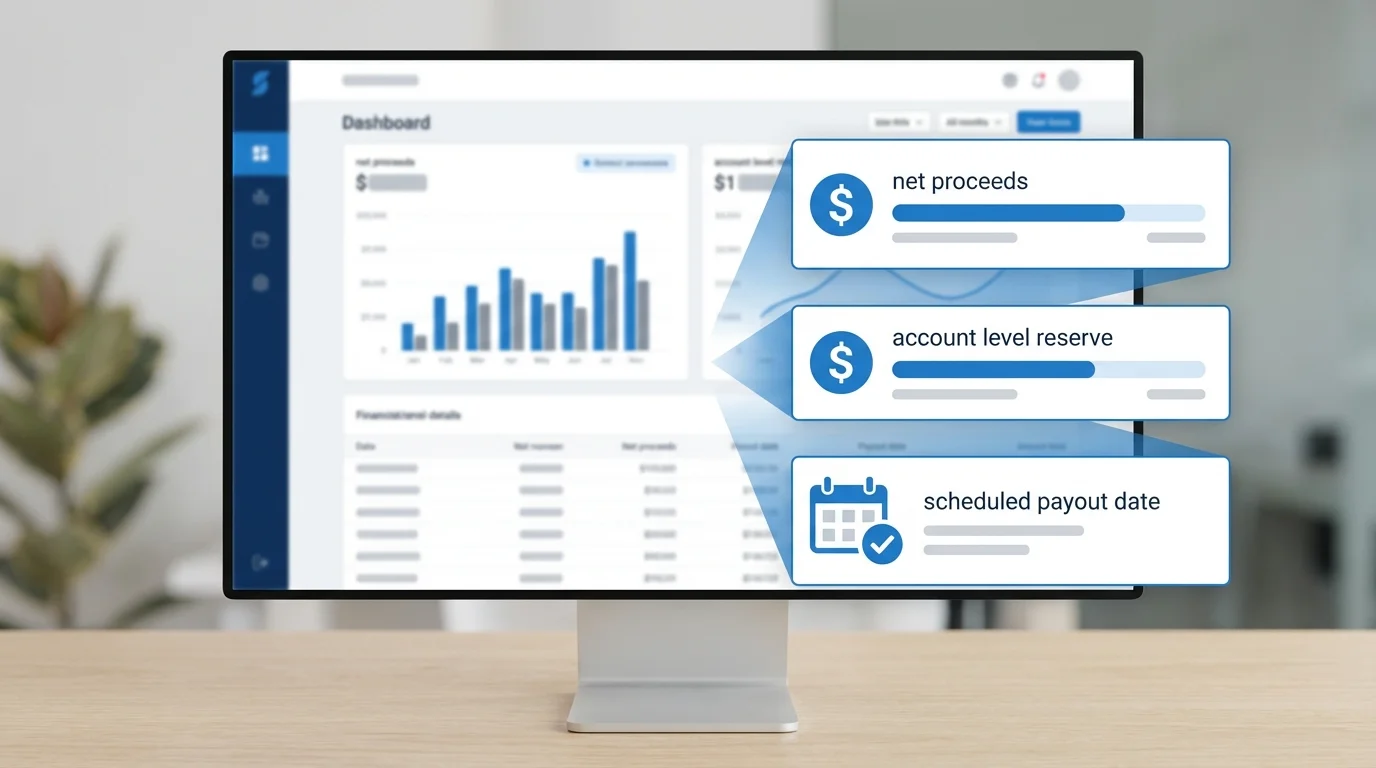
4. The Financial Impact of Payout Cycles Seen Through Data
Diversify payment methods, negotiate supplier terms, consider Amazon Lending for working capital, and maintain a financial buffer. Understanding the payment-reserve-reinvestment cycle is critical for growth.
- Incomplete Bank Account Information: Whether the account holder name has been correctly entered in half-width katakana.
- Credit Card Validity: If the card registered at seller sign-up expires, payment functions will be temporarily suspended.
- Decline in Account Health: A high Order Defect Rate (ODR) increases the reserve ratio, or poses a risk of payment restrictions.
Frequently Asked Questions
- Q. Can Amazon payments be delayed?
- A. Yes, payments can be delayed due to account health issues, verification requirements, or reserve fund holds. Maintaining excellent metrics is the best prevention.
- Q. Can the reserve fund percentage be reduced?
- A. Yes, by maintaining excellent account health metrics over time, Amazon automatically reduces the reserve percentage. Building a strong track record is most effective.
Take Your EC Business to the Next Stage
From cash flow optimization to full Amazon operations strategy, our expert consultants provide comprehensive support.
Get Free Strategy ConsultationSummary
Understanding Amazon's 14-day payment cycle and reserve fund mechanics is essential for healthy cash flow management. By maintaining excellent account health metrics and implementing strategic cash flow planning, sellers can optimize their financial position.
Published: 2026-03-13 / Author: Yuta Ito

Related Articles



References
- [1] Amazon Seller Central Help: Payments FAQ
- [2] Amazon Seller Payment Schedule and Reserve Policy