

Key to O2O Inventory Integration: Single Source Data Management to Prevent Inventory Synchronization Errors Between Stores and EC
In modern retail, managing inventory separately for physical stores and EC sites is a risk that creates enormous opportunity loss. However, simply sharing inventory may cause a decrease in customer satisfaction due to so-called "selling differences", where "products sold at the store are ordered on EC". In this article, we explain the importance of data utilization to dramatically increase inventory turnover rate, especially real-time synchronization by single source data management, and its concrete construction method from the perspective of SCM (Supply Chain Management).

Table of Contents (Click to Expand)
1. Structural Factors of Inventory Synchronization Errors in O2O
When integrating inventory information between stores and EC, the biggest barrier is the "update time lag". In data linkage by conventional batch processing, a lag of several hours occurs, creating a state of "fictitious inventory" rather than dead stock where products settled by POS at physical stores continue to be displayed as "in stock" on EC during that time.
Such information inconsistency is directly linked to not only increased operation costs for cancellation response but also evaluation from search engines (SEO) and decline in trust score within the platform.
2. Single Source Data Management Changes Inventory Turnover
In order to maximize inventory turnover (Inventory Turnover), single source (SSOT) referencing "identical inventory master" in all channels is indispensable. This makes it possible to define inventory of each store as "dynamic inventory" and flexibly allocate it to EC customers.
By realizing data-driven inventory allocation that preferentially sells products stagnant at specific bases on EC, discount sales (markdowns) can be suppressed and profit margins can be secured.
3. Optimization of "Logical Inventory" by Real-time API Integration
Management of "logical inventory" defined considering the characteristics of each sales channel against physical inventory quantity (actual inventory) is the key to O2O success. By bidirectional real-time linkage utilizing API, we build a foundation to instantly update mutual inventory quantities simultaneously with settlement completion at POS cash register or cart securing on EC.

4. Acceleration of Decision Making by Data Visualization
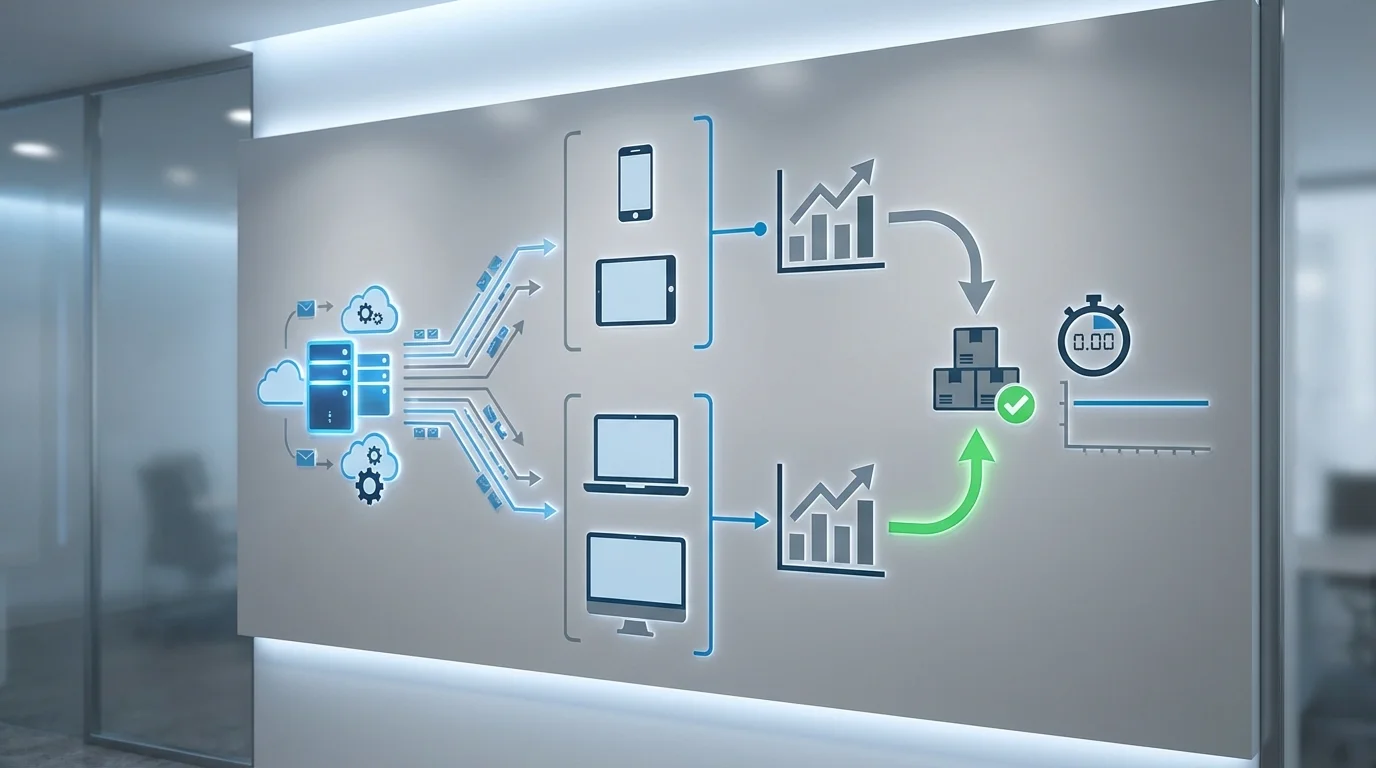
The graph below shows the correlation between inventory synchronization accuracy and inventory turnover rate. It is proven from data that by shifting synchronization frequency from batch processing to real-time API integration, opportunity loss (loss) of sales can be reduced to the limit while minimizing safety stock buffer.
FAQ
- Q. Is real-time integration possible even with legacy POS systems?
- A. Even if a direct API is not equipped, it is possible to increase synchronization accuracy while utilizing existing systems by building an intermediate DB utilizing iPaaS (Integration Platform as a Service) or by microservices.
- Q. Will onsite inventory work change with inventory integration?
- A. It will be simplified because accuracy improves. Under single source management, difference input at the store is immediately reflected in the logical inventory on the EC side, so manual multiple management and adjustment work are significantly reduced.
Take Your EC Business to the Next Stage
Why not realize store management with zero opportunity loss by DX of inventory management?
Get a Free Strategy ConsultationSummary
The essence of inventory integration in O2O is not just sharing of numbers but optimization of customer experience. By introducing real-time synchronization by single source data management, it is possible not only to prevent "selling differences" but also to maximize inventory liquidity to the limit. Let's promote DX by data utilization and aim for dramatic improvement in inventory turnover rate.
Published: 2026-01-15 / Author: Osamu Yasuda
Related Articles

References
- [1] Ministry of Economy, Trade and Industry: Guidelines for Promoting Digital Transformation
- [2] Distribution System Standardization Project: Omni-Channel Inventory Management Protocol (2025)