

Design of "Package Insert Survey" Utilizing Zero-Party Data: Customer Profiling to Maximize LTV
In EC business, "true needs" of customers are becoming difficult to see due to Cookie regulations (end of 3rd party data). Especially when local retailers aim for nationwide expansion with D2C model, acquisition of insights such as "why they chose that product" which cannot be grasped only by purchase history is urgent task. So "Zero-Party Data" voluntarily provided by customers is attracting attention. In this article, we explain UX design of package insert survey starting from unboxing (opening experience) and strategy of LTV (Customer Lifetime Value) maximization by CRM integration of collected data from professional perspective.
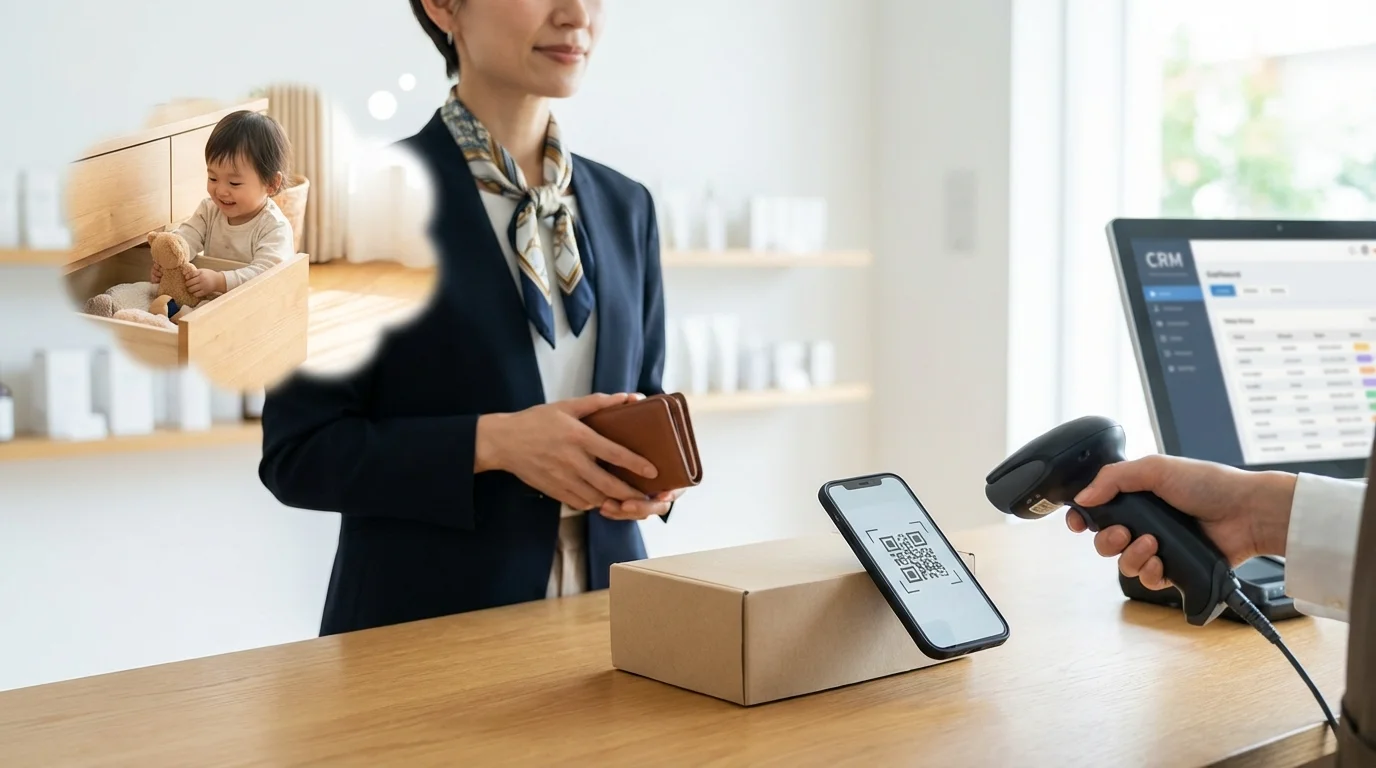
Table of Contents (Click to Expand)
1. Why "Inserts" are Optimal Solution for Zero-Party Data Acquisition
Customers have highest expectation for brand at moment they pick up product. Strength of package insert survey is being able to approach this "Moment of Truth". Compared to digital approaches such as email, by accompanying physical contact, cognitive bias (principle of reciprocity) works easily, enabling collection of high-quality profiling data.

2. 3 Elements of UX Design that Make Customers Want to Answer
It is essential to design survey as part of customer experience (CX), not just clerical questions.
- Reduction of Psychological Friction: Clearly present time cost, such as "Selectable type ending in 30 seconds".
- Value Exchange: Explain benefits of personalization that "proposal next time will be optimized by answering".
- Frictionless Transition: Placement of QR code that starts immediately with smartphone native function.
3. Roadmap to CRM Integration of Collected Data and LTV Improvement
Collected data should be immediately synchronized to MA (Marketing Automation) or CRM. For example, if you get information "using as weekend fun" in survey, attach "Tips to enrich weekend" to next insert. Such "measures close to individual" lead to fostering loyalty beyond simple repeat, and eventually maximization of LTV.

4. Change in Engagement by Data Utilization
The following data shows improvement image of F2 conversion rate (2nd purchase rate) when shifting from uniform communication to personalized measures based on zero-party data.
FAQ
- Q. How many survey items should be limited to?
- A. For the first time, MECE (Mutually Exclusive and Collectively Exhaustive) question composition of 3-5 questions is ideal to prevent withdrawal. Prioritize questions that become "magic number" identifying customer's lifestyle.
- Q. Which is more effective, paper survey or QR code?
- A. Considering immediacy of data integration, digital (QR code) is recommended, but combined use of reply postcard may be effective depending on target age group.
Your EC Business to Next-Generation CRM Strategy
We support sustainable business growth side-by-side with insert design starting from customer insights and data utilization.
Book a Free Strategy ConsultationSummary
Package insert survey is not just a tool for feedback collection, but "contact point between digital and analog" to deeply connect customers and brand. By introducing UX design collecting zero-party data and reducing it to CRM, you can provide personalized experience that competitors cannot imitate. First, review current inserts and take the first step to know your customers.
Published: 2026-1-15 / Author: Osamu Yasuda
Read Also

RECOMMEND
Micro-Influencer Utilization to Accelerate Full-Funnel Marketing: Blueprint to Maximize Mall-Specific Conversion Rate

RECOMMEND
Personalization Using Zero-Party Data: Churn Prediction and Intent Marketing
RECOMMEND
Sophistication of Revenue Forecasting by Cohort Analysis: Upsell/Cross-sell Strategy Aiming for NRR Over 100%
References
- [1] Forbes: The Strategic Importance of Zero-Party Data
- [2] Customer Experience Journal: Impact of Unboxing on Brand Loyalty