
What is Rakuten Point Calendar? MECE Overview of Point Redemption Beginners Should Know
In store operation on Rakuten Ichiba, the Rakuten Point Calendar serves as a 'compass' to control sales waves. The biggest wall beginners entering the EC business face is understanding the complicatedly intertwined point redemption campaigns. In this article, we organize the promotion schedule of the Rakuten Ecosystem in a MECE manner and explain basic knowledge to realize strategic store operations.
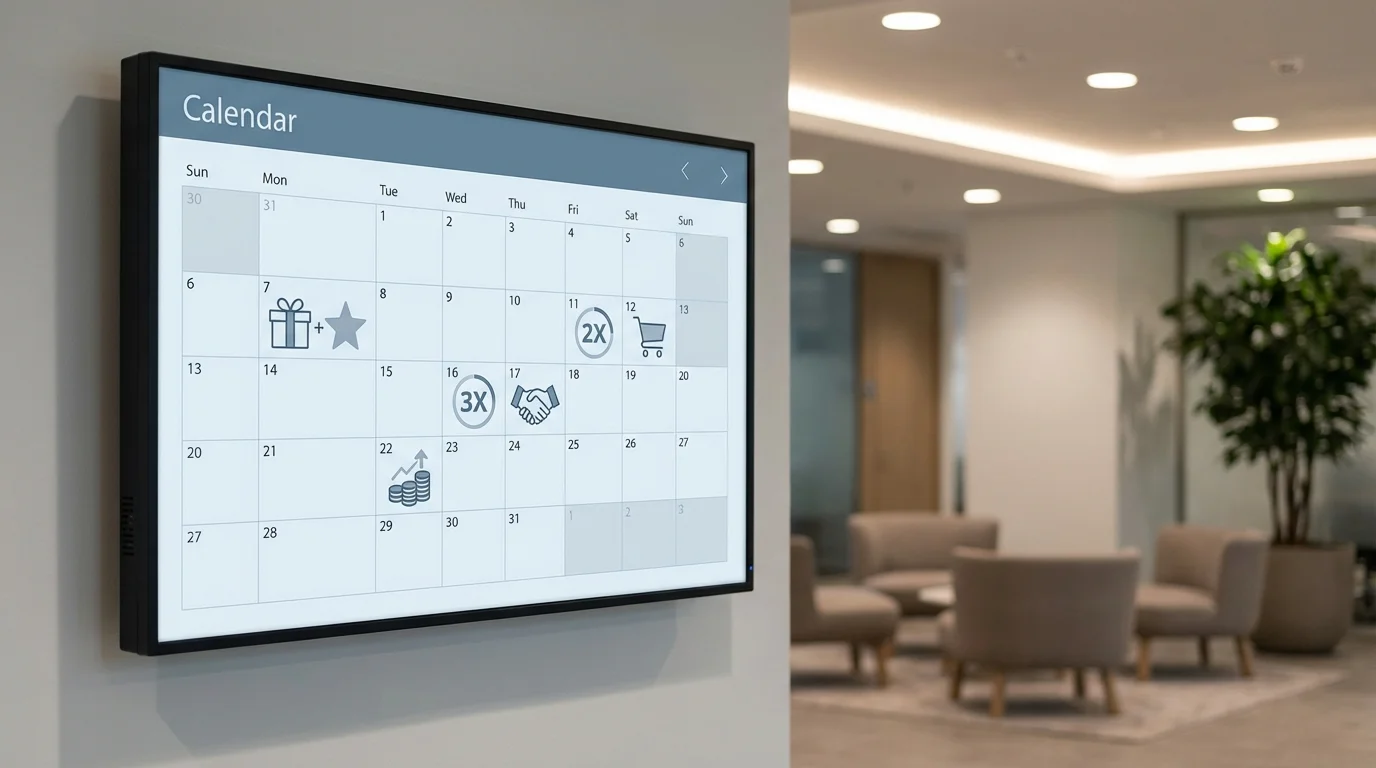
Table of Contents
1. Definition and Importance of Rakuten Point Calendar
The Rakuten Point Calendar is a schedule table that visualizes major events held on Rakuten Ichiba such as 'Shopping Marathon' and 'Rakuten Super SALE', as well as regular point-up days such as 'Days ending with 5 and 0', on a monthly basis.
In EC operation, user purchasing behavior strongly depends on the point redemption rate. Knowing in advance 'when and at what timing points will increase' is directly linked to the optimization of inventory management and ad operation. Especially for beginners, it is necessary to integrate not only official Rakuten events but also competitor trends and own resources into this calendar.

2. MECE Structural Breakdown of Point Redemption
Rakuten's point redemption system is complex, but when organized from a MECE perspective, it can be classified into the following three layers.
- Base Layer (Permanent): Basic multiplier by SPU (Super Point Up Program).
- Regular Layer (Fixed Day): 'Days ending with 5 and 0', 'Patronage Appreciation Day (18th)', 'Wonderful Day (1st)'.
- Event Layer (Irregular): Shopping Marathon, Rakuten Super SALE, Black Friday, etc.
By combining these, users can receive up to 40x or more point redemption. For the store side, setting the day where each layer overlaps as the 'Decisive Day' and concentrating coupon issuance and point multiplier measures becomes the basic strategy.
3. Strategy for "Specific Days" Beginners Should Target
During large-scale sales, 'Days ending with 5 and 0' are particularly noteworthy. On the '5th' or '10th' during the Shopping Marathon, multiple campaigns overlap, so the daily circulation amount jumps to several times to over ten times that of a normal day.
A common mistake beginners make is conducting uniform promotion on all dates. If resources are limited, aiming for the day with the highest peak on the calendar and thoroughly conducting prior 'reservation sales' and 'announcements' is the key to improving CVR (Conversion Rate).

4. Influence of Campaigns Seen in Data
The graph below shows the relative distribution expectation value for each specific day in a general Rakuten store. You can visually understand how large the impact of Shopping Marathon and Super SALE is.
FAQ
- Q. Where can I check the Rakuten Point Calendar?
- A. The official Rakuten promotion calendar can be checked on the campaign announcement page in 'RMS (Rakuten Merchant Server)' for store operators. It is also common to forecast based on the previous year's actuals.
- Q. Should beginners participate in all events?
- A. Participating in all may squeeze profit margins. It is recommended to start by focusing on 'Shopping Marathon' and 'Days ending with 5 and 0' to test point multipliers and coupon strategies.
Take Your EC Business to the Next Stage
Are you struggling with complex Rakuten campaign design or creating a data-driven promotion calendar?
Consult for Free StrategySummary
The Rakuten Point Calendar is not just a schedule, but a strategic tool to maximize store sales. By organizing SPU, specific days, and large events in MECE and investing your resources at the optimal timing, even beginners can achieve certain results. Let's start by preparing for the next 'Day ending with 5 or 0'.
Published: February 12, 2026
Author: RISA WATANABE
Related Articles



References
- [1] Rakuten Group, Inc. 'Rakuten Ichiba Campaign Calendar'
- [2] RMS Store Operation Manual 'Basics of Point/Coupon Measures'